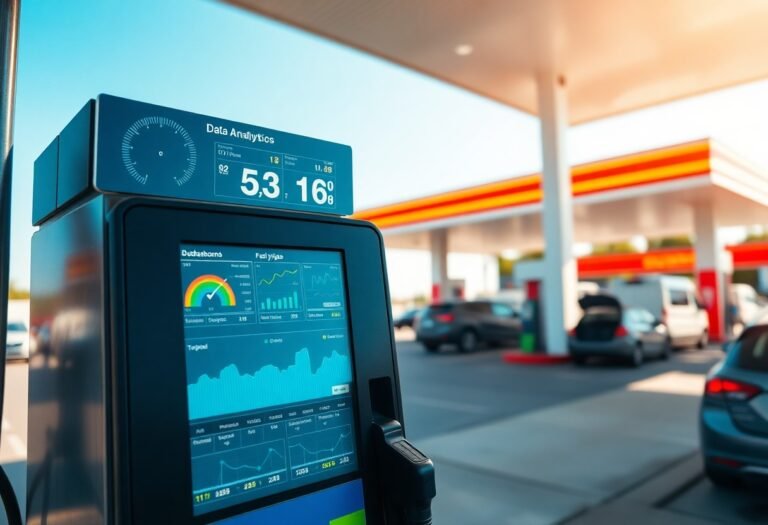



Many businesses face challenges in effectively managing fuel inventory, leading to increased costs and operational inefficiencies. By leveraging IoT technology, you can gain real-time visibility into fuel levels, monitor usage patterns, and receive alerts for potential leaks or shortages. This not only enhances your ability to make informed decisions but also optimizes resource allocation, ensuring that your operations run smoothly and reducing waste. Embracing IoT solutions empowers you to enhance productivity while safeguarding your fuel assets.
Understanding IoT in the Fuel Industry
Definition of IoT
The Internet of Things (IoT) refers to the interconnected network of devices that collect and exchange data through the internet. In the context of the fuel industry, IoT technology enables various devices, such as sensors, GPS trackers, and automated systems, to communicate real-time information regarding fuel inventory levels, equipment status, and distribution logistics. This connectivity allows you to monitor and manage fuel inventories more effectively, ensuring that you have the right amount of fuel available when you need it.
When these devices are integrated into fuel management systems, they provide actionable insights that help optimize operations, reduce waste, and enhance regulatory compliance. You’ll find that this technological advancement not only streamlines processes but also supports data-driven decision-making, transforming how fuel inventory management is approached.
Historical Overview of Fuel Inventory Management
Fuel inventory management has evolved significantly over the decades. Initially, it relied on manual methods, such as recording stock levels using pen and paper, leading to inaccuracies and delays in reporting. As the demand for fuel increased and supply chains became more complex, the need for more reliable and efficient systems emerged. By the late 20th century, automated systems began to appear, utilizing rudimentary database methods for tracking fuel levels and orders.
With the introduction of computer technologies in the 1980s and 1990s, inventory management practices became more sophisticated. Automated refueling systems and software applications started to pave the way for improved accuracy and efficiency. However, despite these advancements, the industry still faced challenges in real-time data accessibility and integration, which set the stage for the rise of IoT technologies.
Key Technologies Enabling IoT
Several key technologies are driving the integration of IoT in fuel inventory management. These include advanced sensor technology, cloud computing, and data analytics. Sensors installed in storage tanks can provide you with continuous updates on fuel levels, temperature, and even potential contamination, transmitting this data to cloud platforms for centralized monitoring. This real-time visibility allows quicker response times to variations in fuel levels, minimizing the risk of running out.
Cloud computing plays a pivotal role in storing and processing vast amounts of data generated from these IoT devices. You can access this information from anywhere, facilitating better inventory planning and coordination. Data analytics enables you to interpret complex datasets, identifying trends and making informed decisions that enhance operational efficiency and reduce costs.
Real-life applications of these technologies can be seen in companies like ExxonMobil, which utilizes IoT sensors to track fuel consumption across its network. This allows them to manage fuel distribution more effectively, optimizing routes based on consumption patterns and inventory levels. Your operations can similarly benefit from adopting IoT technologies, leading to significant advancements in efficiency and cost management.
The Challenges of Traditional Fuel Inventory Management
Inefficiencies in Manual Processes
Relying on manual processes for fuel inventory management often leads to significant inefficiencies. You may find yourself spending countless hours tallying and cross-referencing fuel amounts, which are usually collected via spreadsheets or paper logs. An error in data entry can result in discrepancies, mismanagement, and potential overstock or shortages, all incurring unnecessary costs.
The time-consuming nature of these manual methods can divert attention and resources away from more critical operational tasks. With employees bogged down in paperwork, you miss out on opportunities to enhance productivity and streamline operations, which ultimately impacts the bottom line.
Risks of Fuel Theft and Loss
Fuel theft is a persistent threat in the industry, and your traditional inventory management practices may leave you vulnerable. The lack of real-time oversight can result in unnoticed losses, potentially costing your business thousands of dollars. By employing outdated inventory methods, you open the door to dishonest practices and misappropriations, further exacerbating financial losses.
The statistics paint a grim picture; according to the National Association of Truck Stop Operators, fuel theft can account for as much as 20% of a business’s total fuel budget. Without robust tracking and security measures, these incidents can significantly erode your profitability and create logistical challenges that affect your operations.
Difficulty in Real-time Tracking
Real-time tracking of fuel inventory presents another challenge when using traditional methods. You might be relying on periodic checks, which can lead to outdated information and a reliance on estimates rather than accurate data. This limitation can result in poor decision-making, as you lack clarity on your current fuel levels and usage trends.
The absence of real-time insights prevents you from responding promptly to fluctuations in demand or unexpected supply chain disruptions. In an environment where fuel consumption patterns can change rapidly, this delay can hinder your ability to manage inventory effectively and strategically.
Difficulty in Real-time Tracking
Moreover, without automated systems, you may struggle to predict future fuel needs accurately, affecting your procurement strategies. By not having immediate access to data, you effectively gamble on fuel orders, risking stockouts or overstock situations—both of which can be detrimental to your operations and financial health.

How IoT Transforms Fuel Inventory Management
Real-time Data Collection and Analysis
Your fuel inventory management can greatly benefit from real-time data collection enabled by IoT devices. These devices monitor fuel levels and usage patterns continuously, delivering data instantaneously to your management systems. By utilizing smart sensors and connected devices, you can eliminate the lag time associated with manual data entry, leading to more accurate and immediate insights into your inventory status. Whether it’s tracking fuel consumption during peak hours or identifying unexpected dips in tank levels, this technology offers you a comprehensive view of your operations at any given moment.
The ability to analyze this data in real-time allows for swift decision-making. For instance, if a fluctuation in fuel levels is detected, you can respond immediately by adjusting your supply orders. This proactive approach minimizes the risks of shortages and excess inventory, helping you maintain a balance that optimizes costs and operational efficiency. Your ability to react quickly is further enhanced by customizable alerts that notify you when certain thresholds are met, keeping you in control of your inventory management.
Predictive Analytics for Demand Forecasting
Utilizing IoT technology doesn’t just stop at data collection; it extends into predictive analytics for forecasting future demand. By harnessing historical consumption data and correlating it with other variables such as seasonal trends, market conditions, and even local events, you can enhance your ability to forecast fuel requirements accurately. This predictive capability means you can prepare for fluctuations in demand before they occur, ensuring you never run low during peak usage times.
With accurate demand forecasting, you can streamline your supply chain operations. For example, if you’ve identified a trend of increased demand during certain months based on gathered data, you can adjust your orders accordingly. This foresight not only enhances your inventory efficiency but can also result in significant cost savings and more favorable negotiations with suppliers. Predictive analytics empowers you to stay one step ahead, keeping your operations both agile and cost-effective.
Automated Inventory Control Systems
Integration of IoT into your inventory management systems paves the way for automated inventory control. These systems, equipped with smart technology, autonomously monitor fuel levels, track usage, and forecast requirements. By automating these processes, you reduce reliance on manual oversight and minimize the potential for human error. Imagine systems that automatically reorder fuel when levels drop below a predefined threshold, ensuring continuity without your constant input.
Moreover, automated systems provide a level of detail that’s hard to achieve manually. Your inventory management can now include sophisticated controls that account for variances in delivery times or pricing changes, adjusting orders dynamically based on live data feeds. This intelligent automation not only enhances operational efficiency but also frees up your time, allowing you to focus on strategic planning and overall business growth. The systematic approach to inventory management leads to substantial cost reductions and an increase in accountability throughout your operations.

Case Studies of IoT Implementation
- Shell: Implemented IoT technologies in 1,500+ retail locations, achieving a 30% reduction in inventory discrepancies.
- BP: Utilized IoT sensors in its oil rigs, resulting in a 25% decrease in fuel theft incidents within the first year.
- Chevron: Integrated IoT applications for real-time data monitoring, saving over $50 million annually through optimized fuel usage.
- ExxonMobil: Reported a 40% improvement in operational efficiency by using IoT to monitor tank levels and maintenance needs.
- Philips 66: Reduced fuel shortages by 35% through predictive analytics enabled by IoT technology, improving supply chain reliability.
Success Stories from Major Oil Companies
Your exploration of how major oil companies have orchestrated IoT solutions reveals impressive results. For instance, Shell’s adoption of IoT in its retail outlets not only streamlined inventory management but also fostered a culture of proactive decision-making among employees, significantly reducing operational costs. With a reported 30% decrease in inventory discrepancies, Shell showcases how technology can elevate efficiency.
BP serves as another exemplary case, leveraging IoT devices across oil rigs to enhance fuel security. The integration of smart sensors led to a remarkable 25% reduction in fuel theft incidents. By utilizing real-time data analytics, BP transformed its operational framework, applying insights that bolster financial performance while safeguarding valuable assets.
Small and Medium Enterprises Leveraging IoT
Don’t overlook the significant impact IoT can have on small and medium enterprises (SMEs). Many of these businesses are harnessing IoT capabilities to revolutionize their fuel inventory management processes. By adopting sensors and cloud solutions, SMEs can achieve levels of efficiency that were once only available to larger corporations. For example, a small logistics company equipped with IoT technology increased its fuel usage accuracy by 50%, allowing for better financial forecasting.
Furthermore, the scalability of IoT solutions means you don’t have to break the bank to implement them. Simple device installations have enabled SMEs to monitor fuel levels and usage patterns in real-time, leading to smarter procurement strategies. As a result, businesses have reported an average of 20% lower fuel costs, which significantly affects their bottom line.
A growing number of SMEs realize that incorporating IoT technology aligns with contemporary business practices, allowing them to compete more effectively. Not only do these innovations yield immediate cost savings, but they also provide long-term benefits such as enhanced customer satisfaction and improved operational strategies.
Lessons Learned from Failed Implementations
Failures in IoT implementation underscore the necessity of meticulous planning and execution. You may find that some companies underestimated the technological requirements necessary for effective integration. A large fuel distributor, for instance, invested heavily in IoT devices but failed to properly train its personnel on their usage, leading to a 40% increase in operational errors.
Additionally, a lack of robust cybersecurity measures resulted in data breaches and compromised systems for several firms. Without proper safeguards, sensitive fuel and operational data were exposed, jeopardizing the company’s reputation and financial standing. These learned lessons reiterate the importance of not only the technology itself but also the support infrastructure that must accompany it.
Failures in IoT deployments highlight the importance of comprehensive training and robust security measures as paramount factors for success. A well-executed strategic plan encompassing both the technology and human elements positions your organization to thrive in the evolving landscape of fuel inventory management.
Benefits of IoT for Fuel Inventory Management
Enhanced Accuracy and Efficiency
The implementation of IoT devices allows for real-time monitoring of fuel levels, significantly enhancing the accuracy of your inventory data. Sensors placed in storage tanks continuously broadcast information about fuel quantities and conditions. This data not only helps in maintaining optimal inventory levels but also minimizes the risk of overstocking or running out of fuel unexpectedly. With accurate data, you can make timely decisions that align with market demands.
Additionally, automated alerts regarding stock levels and anomalies reduce the need for manual checks, streamlining your operations. This means you can focus on strategic tasks rather than being bogged down by routine inventory assessments. For instance, companies have reported a 30% reduction in labor costs attributed to fewer manual interventions due to automation.
Cost Savings through Optimization
IoT provides insights that allow you to optimize your fuel procurement and distribution processes, ultimately leading to significant cost savings. By analyzing usage patterns and predicting demand, you can adjust your purchasing schedules and avoid last-minute, expensive procurement rushes. This predictive capability can also aid in negotiating better rates with suppliers based on anticipated needs, further enhancing your bottom line.
Moreover, combining IoT data with supply chain analytics enables you to identify inefficient routes and processes, leading to better logistics management. Companies adopting IoT technologies have reported a 20% decrease in transportation costs due to more efficient routing and scheduling, showcasing how fuel management can become not just a matter of inventory, but a broader aspect of operational efficiency.
By harnessing IoT for optimization, your overall profitability can improve as you learn to balance stock with usage trends, reducing waste and unforeseen expenses.
Improved Regulatory Compliance
Maintaining compliance with various regulatory requirements can be daunting in the fuel industry. IoT solutions automate the compliance processes, monitoring fuel storage conditions and tracking deliveries in real-time. You no longer have to manually keep records; instead, IoT systems generate precise logs of fuel transactions and environmental conditions, simplifying audits and compliance checks.
With built-in alerts for deviations from regulatory standards, you are proactively informed, reducing the likelihood of penalties or legal issues. Implementing these technologies can lead to a significant increase in compliance rates, with some companies reporting a compliance success rate of over 95% after integrating IoT solutions.
Improved compliance potential not only minimizes risks but also fosters trust among your stakeholders, showcasing your commitment to safety and environmental regulations.

Future Trends in IoT and Fuel Management
The Role of AI and Machine Learning
The incorporation of Artificial Intelligence (AI) and Machine Learning (ML) is poised to elevate fuel inventory management significantly. By leveraging historical data, AI algorithms can predict fuel demand patterns with remarkable accuracy, allowing you to optimize inventory levels and reduce waste. For example, algorithms can analyze seasonal trends, weather conditions, and even market fluctuations, enabling you to make proactive decisions about ordering fuel at the right time.
Additionally, AI-driven analytics can provide insights on operational efficiencies. Through real-time monitoring, you can identify anomalies in fuel usage, pinpoint potential leaks, and implement corrective measures quickly. This not only saves costs but also enhances operational safety, giving you more control over your fuel management processes.
Advancements in Sensor Technology
Recent advancements in sensor technology are transforming how you track and manage fuel inventory. Smart sensors can now provide real-time data on fuel levels, temperature, and even contamination. This data can be transmitted wirelessly to your management systems, allowing for immediate response to fluctuations that could affect supply availability or safety. For instance, a sudden drop in fuel levels can trigger alarms, prompting timely reorders or inspections.
Furthermore, modern sensors are increasingly designed for durability, ensuring they can withstand harsh environmental conditions without compromising accuracy. Investment in these sophisticated sensors not only supports seamless data collection but also enhances your ability to automate fuel inventory processes, refining operational efficiency.
These sensors often integrate with IoT platforms, offering you a centralized dashboard to monitor various metrics. You can receive alerts, generate reports, and even forecast usage trends directly from your smartphone or computer, making fuel management more manageable than ever.
The Potential of Blockchain for Fuel Transactions
Blockchain technology presents a unique opportunity to enhance the transparency and security of fuel transactions. By establishing a decentralized ledger, every transaction can be recorded immutably, which gives you confidence in your supply chain’s integrity. This transparency can help mitigate risks related to fraud, ensuring that you are only paying for what you receive.
Moreover, smart contracts can automate processes such as payments and compliance checks, reducing the administrative burden on your team. With blockchain, you could receive automated confirmations when fuel is delivered, triggering immediate payment while ensuring that both parties meet the agreed-upon terms. This can streamline your operations and significantly reduce the potential for disputes.
As an example, companies experimenting with blockchain in fuel transactions have reported improved trust among stakeholders and reduced transaction times, ultimately resulting in cost savings and efficiency gains that could benefit your business.
Conclusion
The implementation of IoT technology in fuel inventory management streamlines operations, enhances accuracy, and offers real-time insights that empower you to make informed decisions. By integrating smart sensors and data analytics into your inventory processes, you can significantly reduce errors, optimize fuel levels, and improve overall efficiency in your supply chain.
As you adopt these advanced tools, you position your business to respond swiftly to market changes, minimize waste, and maximize profitability. Harnessing the power of IoT not only revolutionizes how you manage fuel but also ensures that you stay competitive in an increasingly data-driven marketplace.