
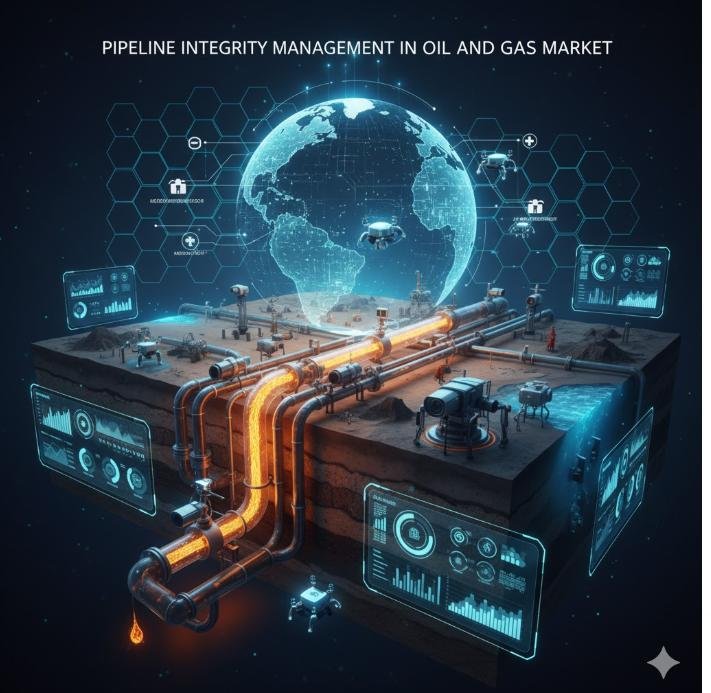

Pipeline integrity management in the oil and gas market is experiencing unprecedented growth worldwide, driven by expanding energy demands and stringent safety regulations. Industry giants like Baker Hughes and ROSEN Group are at the forefront of delivering cutting-edge solutions to ensure the safe, efficient, and reliable operation of global pipeline networks.
## The Importance of Pipeline Integrity Management
Pipeline integrity management encompasses a range of inspection, monitoring, maintenance, and repair services designed to safeguard pipelines from failures such as leaks, corrosion, cracks, and material degradation. These systems are critical in the oil and gas sector, where pipelines transport vast quantities of crude oil, natural gas, and refined products over thousands of kilometers onshore and offshore. Ensuring pipeline integrity not only protects the environment from hazardous spills but also minimizes operational downtime, improves safety, and complies with increasingly stringent regulatory mandates worldwide.
As pipelines age and expand into challenging environments—ranging from deepwater offshore sites to arctic and seismically active zones—the need for advanced integrity solutions becomes imperative. The integration of technology such as IoT sensors, AI-driven analytics, and digital twins has transformed pipeline integrity management from reactive maintenance to a predictive, data-driven discipline that allows operators to detect and address risks in real time.
## Market Growth and Drivers
The global pipeline integrity management market is booming, valued at over USD 2 billion as of 2024 and projected to grow at a compound annual growth rate (CAGR) of around 4.5% to 5.6% over the next decade. Several key factors drive this expansion:
* **Rising global energy demand:** Growing consumption of oil and natural gas, especially in emerging economies, is leading to extensive pipeline network expansions to meet transportation needs efficiently.
* **Aging infrastructure:** An increasing share of pipelines worldwide are decades old and require rigorous inspection and maintenance to prevent failures.
* **Regulatory pressure:** Governments and safety agencies are enforcing tight compliance standards with mandatory inspection intervals, corrosion management, and integrity assessments.
* **Technological advancements:** The adoption of smart inspection tools (e.g., intelligent pigs), real-time monitoring systems, and predictive analytics powered by AI reduces operational risks and optimizes maintenance costs.
* **Environmental concerns:** Preventing pipeline leaks and spills safeguards ecosystems and aligns companies with growing societal expectations for sustainability.
North America currently leads the market due to its mature infrastructure and strict regulatory framework, while Asia-Pacific is emerging rapidly with new pipeline projects in India, China, and Southeast Asia.
## Leading Players and Innovative Solutions
Two industry giants dominate the pipeline integrity market with innovative products and extensive global presence:
### Baker Hughes
Baker Hughes, a U.S.-based oilfield services powerhouse, offers comprehensive pipeline integrity solutions, including advanced ultrasonic phased array inspection tools capable of detecting minute cracks with high precision. Its collaboration with SGS to develop predictive corrosion management technologies demonstrates a strategic move toward integrating AI and big data into asset management. Baker Hughes leverages its wide-ranging oil and gas portfolio to mitigate sector risks and provide end-to-end pipeline solutions.
### ROSEN Group
Switzerland’s ROSEN Group is a pioneer in pipeline inspection and integrity software, with a presence in over 100 countries. They focus on vertical integration to maintain strict quality control and cost efficiency. Their digital integrity management platform, NIMA, exemplifies their forward-thinking approach, enabling traceable, verifiable pipeline records that accelerate accurate decision-making and risk assessment. ROSEN’s continual product innovation and strong service delivery anchor their market leadership.
Other notable players, such as NDT Global, T.D. Williamson, SGS, and Emerson, also contribute by advancing inspection technologies, robotics, and automated integrity management systems, propelling the industry towards greater safety and efficiency.
## Technological Trends Shaping the Market
### Digital Transformation and Predictive Maintenance
The sector is witnessing a significant shift from traditional periodic inspections to continuous, software-driven monitoring using sensors and data analytics. This digital transformation allows real-time detection of corrosion, micro-leaks, and structural changes, enabling predictive maintenance strategies that prevent failures before they occur.
### Automation and Robotics
Smart pigs—devices that travel inside pipelines—combined with drones and robotic inspection systems reduce human intervention, improve accuracy, and access hard-to-reach areas. Automation enhances operational safety and lowers inspection turnaround times.
### Integration of AI and Machine Learning
AI algorithms analyze historical and sensor data to forecast potential risks and optimize maintenance schedules. This proactive approach optimizes resource allocation and mitigates environmental and financial impacts of pipeline failures.
## Conclusion
Pipeline integrity management is critical to ensuring the safe and efficient transport of vital energy resources amid growing global demand and complex operating environments. Fueled by technological innovation, regulatory mandates, and environmental imperatives, the market is expanding robustly worldwide. Industry leaders like Baker Hughes and the ROSEN Group are pioneering advanced inspection and integrity solutions, leveraging AI, automation, and digitalization to mitigate risks and enhance operational reliability. As the oil and gas sector evolves, continued investment in pipeline integrity management remains essential to safeguarding infrastructure, protecting communities, and sustaining global energy supplies.